

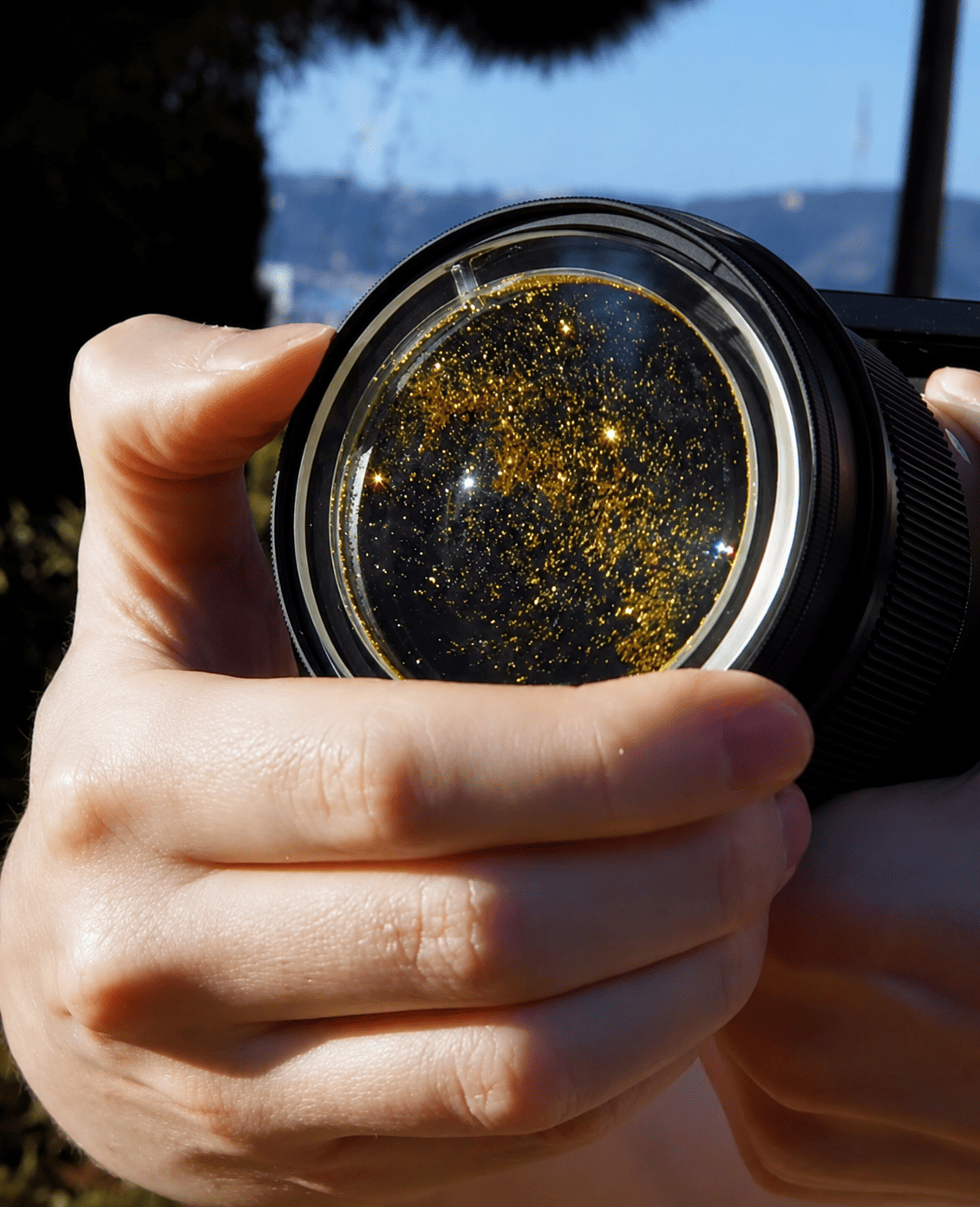
Every lens has a filter size, but it’s not always obvious where to find it. If you’re choosing a filter for your camera, understanding this number is the first step.
Once you know what to look for, finding the right size becomes simple.
A lens filter size refers to the diameter of the front thread on your lens where filters screw on.
It’s measured in millimeters (mm) and can vary depending on the lens.
For example, your lens may use:
This number is not related to your camera body. It depends entirely on the lens you’re using.
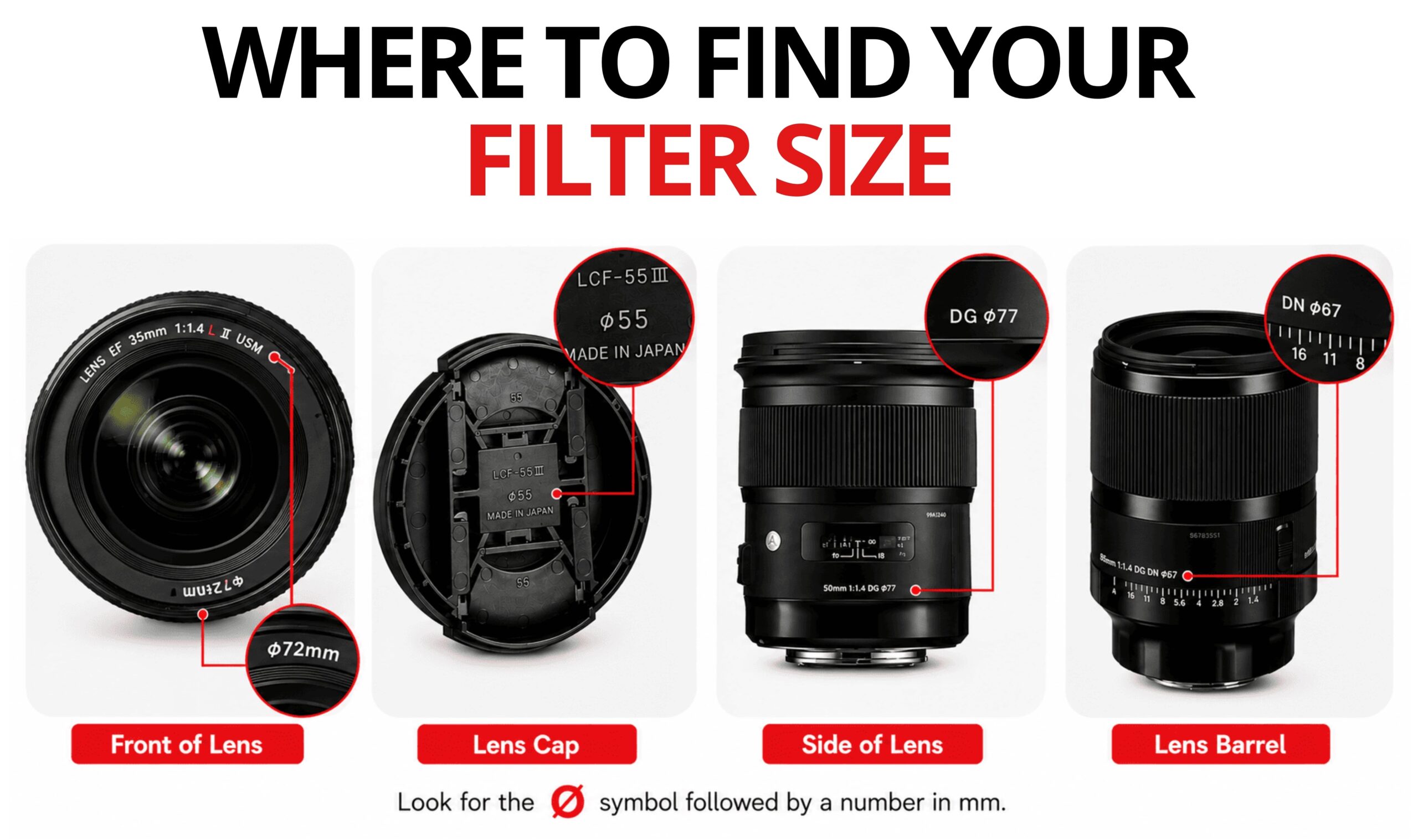
Most camera lenses have the filter size printed on the front.
Look for a number next to the Ø symbol.
The Ø symbol indicates the diameter of the filter thread.
If you don’t see it on the front of the lens, you can also check the side of the lens, the lens cap, the manufacturer’s specifications, or search your exact lens model online.
Different lenses have different front element sizes.
Wide-angle lenses, zoom lenses, and compact prime lenses may all use different filter diameters. This is completely normal and is one reason many photographers prefer to standardize their filter setup.
Yes.
This is where step-up rings become useful.
A step-up ring allows you to mount a larger filter onto a smaller lens.
For example:
This allows photographers to use one filter across multiple lenses instead of buying a separate filter for each size.
At SZ Filters, we selected 77mm after analyzing the filter thread sizes used across many of today’s most popular photography lenses. Our goal wasn’t simply to choose a common size—it was to create a system that works with the widest range of lenses while helping photographers avoid buying the same filter multiple times.
Although many professional lenses use 82mm filter threads, the front optical element is often smaller than the filter thread itself. In many cases, photographers can use a 77mm filter with the appropriate step-up ring, allowing a single filter to be shared across multiple lenses.
For photographers using ultra-wide or specialty lenses that truly require a larger filter diameter, SZ Filters also offers selected 95mm filters.
To make this system even more versatile, we provide a complete range of step-up rings, making it easy to adapt one filter to different lens sizes.
Our philosophy has always been simple: help photographers invest in creativity, not duplicate gear. Instead of buying the same creative filter in several different sizes, you can build one creative filter kit and use it across most of your lenses with the right adapters. This makes your gear more versatile, more affordable, and ready for almost any shooting situation.
Before purchasing a filter, avoid these common mistakes:
Taking a moment to verify your lens size can help ensure your filter fits correctly.
Finding your lens filter size is simple once you know what to look for.
Check your lens for the Ø symbol, confirm the diameter in millimeters, and choose the matching filter—or use a step-up ring if needed.
Once you know your filter size, you’re ready to start building a creative filter setup that works across your lenses. Whether you’re capturing portraits, landscapes, weddings, or cinematic video, using the correct filter size ensures the best fit and lets you focus on creating, not troubleshooting your gear.
Shop Creative Lens Filters
Shop Adapter Rings / Step-Up Rings